
The yew that watched a war
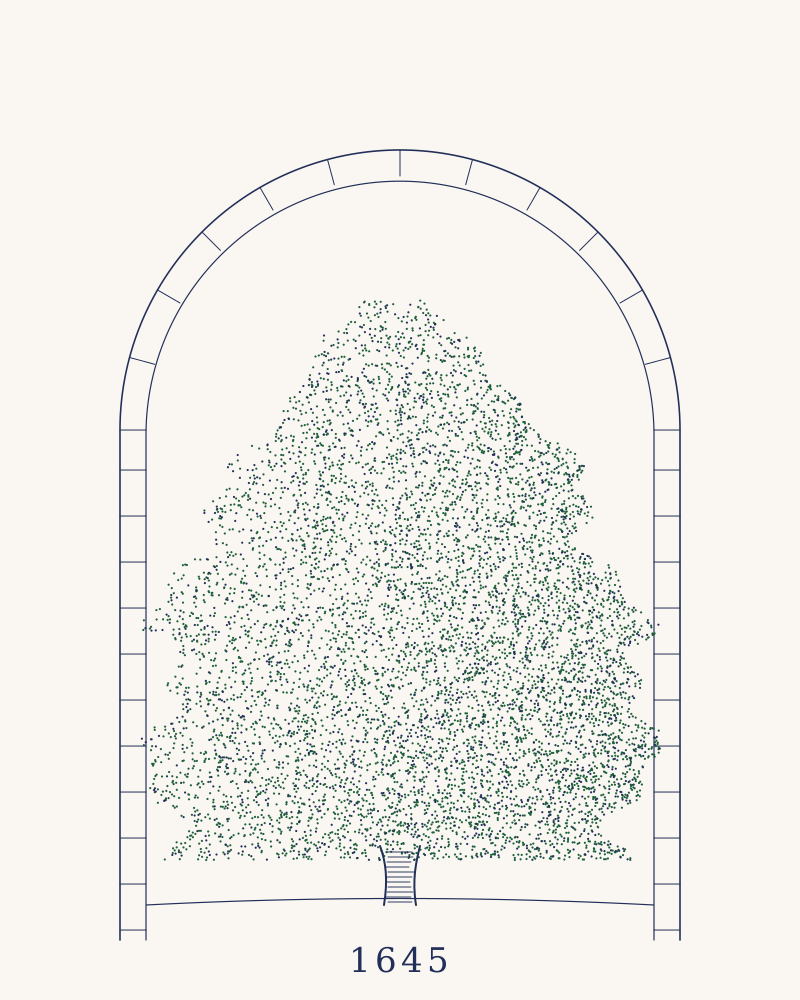
In the walled garden of Oxford Botanic Garden stands a yew planted in 1645. Oxford was the King's capital at the time, England was at war with itself, and the tree has outlived every person who saw it planted.
A garden older than the war
Oxford Botanic Garden opened on 25 July 1621 as a physic garden, growing medicinal plants to teach medical students. Henry Danvers, 1st Earl of Danby, paid for it, and it is the oldest botanic garden in Britain.
In 1642 the garden appointed its first keeper, Jacob Bobart. The same year, the Civil War began. After the Battle of Edgehill that October, Charles I made Oxford his headquarters, and from 1644 the city was the capital of the Royalist cause, home to the King’s own Parliament.
1645
Parliament’s armies besieged Oxford three times. In 1645, the year of the second siege, Bobart planted a row of ornamental hedges in the walled garden. One of them was an English yew, Taxus baccata. Thanks to the garden’s records, we know the exact year. A year later, in June 1646, Oxford surrendered and the keys of the city were handed to Sir Thomas Fairfax.
A youngster, by yew standards
At around 380 years old, Bobart’s yew is the oldest tree in the garden. For a yew, though, it is still young. Yews can live for thousands of years, and a yew is not counted as ancient until it reaches about 900.
Part of the secret is renewal. When Storm Ciara swept across Britain in February 2020, it tore a large section from the top of the tree. The garden expected a full recovery: fallen yew branches can take root, and yews are remarkably good at growing back.
The medicine nobody knew
When Bobart planted his hedge, nobody knew yews held medicine. More than three centuries later, in 1971, chemists isolated taxol from the bark of its North American cousin, the Pacific yew (Taxus brevifolia). It went on to become an important cancer medicine.
A hedge planted in wartime turned out to be a living record, and a reminder that the plants around us may hold answers we have not yet learned to ask for.